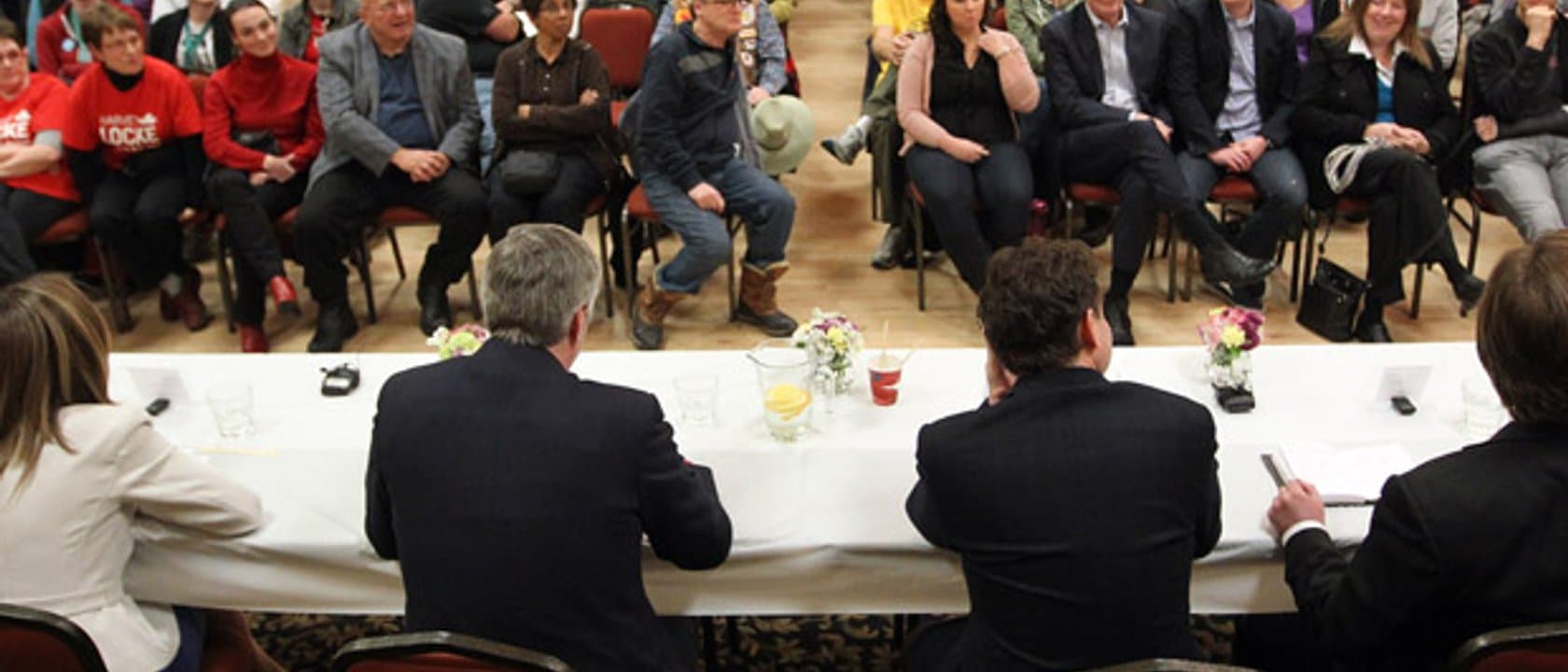
Dinner Discourse
Participatory dinner events, political discourse
Calgary, Alberta
Dinner Discourse is Melisa's longest-running project — a 20+ year series of dinner gatherings (since 2000) that bring people together around a shared meal to discuss politics, social justice, and community issues. Started as "Curry for Currie" with collaborator Rob Smith, the premise is simple and radical: cook a meal, set a table, invite people who might not normally sit together, and talk about what matters.
The series has hosted municipal candidates, community organizers, artists, and neighbours at the Killarney-Glengarry Community Association and other Calgary venues, drawing up to 200 attendees. Key events include Pizza for Mayor (2010), Pie for PC Candidate (2011), Soup for Success (2013), The Great Soup Debate (2017, with national CBC coverage), and Ward 6 Waffles (2025). Topics have ranged from food security policy to universal basic income, from Indigenous reconciliation to local transit. The format — conversation over food, not lectures from podiums — creates the conditions for genuine exchange rather than performative debate.
Dinner Discourse embodies Melisa's core thesis: that food is the most powerful community-building tool we have. When people cook together and eat together, the barriers between disciplines, backgrounds, and political positions become permeable. This is artivism in its most elemental form.
The Situation
Traditional political engagement formats — town halls, panel discussions, debate stages — tend to reinforce existing power dynamics and attract people who are already politically engaged. Melisa saw that the people who most needed to participate in political conversation were often the ones least likely to attend a formal event. She also observed that the best political conversations she'd ever witnessed happened around dinner tables, not podiums.
The Approach
Started in 2004 as "Curry for Currie" with collaborator Rob Smith, the format is deliberately simple: cook a good meal, set a real table (not folding chairs in a gymnasium), invite a diverse mix of people, and introduce a topic worth discussing. The meal does the work of breaking down barriers — when you're passing bread and pouring wine, the dynamics shift from adversarial debate to genuine conversation. Melisa hosts, cooks, and facilitates, but the conversation belongs to the guests.
Key events over the years: Pizza for Mayor (2010, CommunityWise), Pie for PC Candidate (2011, Calgary Currie), MP for MP (Meat Pie for Member of Parliament, 2012), Soup for Success (2013, Ward 8), The Great Soup Debate (2017, Ward 8 — with national CBC coverage), Curry for Currie (multiple years), and Ward 6 Waffles (2025, current iteration). Most events were held at the Killarney-Glengarry Community Association (KGCA), with some at CommunityWise. A committee of community members was struck in 2015 to plan events collaboratively.
The Challenges
Sustaining a project for 20+ years with no institutional support requires persistence. There's no funding, no organizational backing — just Melisa's commitment to the idea that food and conversation can create political engagement. Finding the right mix of guests, choosing topics that generate genuine exchange rather than argument, and creating a space where people with strongly different views can sit together requires ongoing facilitation skill.
The Impact
Over 20+ years, Dinner Discourse has hosted municipal candidates, community organizers, artists, educators, and neighbours, drawing up to 200 attendees at events. One event received national CBC coverage. Topics have included food security policy, universal basic income, Indigenous reconciliation, local transit, and Calgary municipal politics. The series has become a model for how informal, food-centred gatherings can create the conditions for genuine democratic participation.
Lessons Learned
Dinner Discourse proves Melisa's core thesis: that food is the most powerful community-building tool we have. The format — conversation over a shared meal — works because it treats participants as whole human beings (who need to eat and be comfortable) rather than as positions to be debated. The longevity of the project (20+ years and counting) demonstrates that this model is sustainable without institutional infrastructure.